
September 19 • Paolo Borsellino
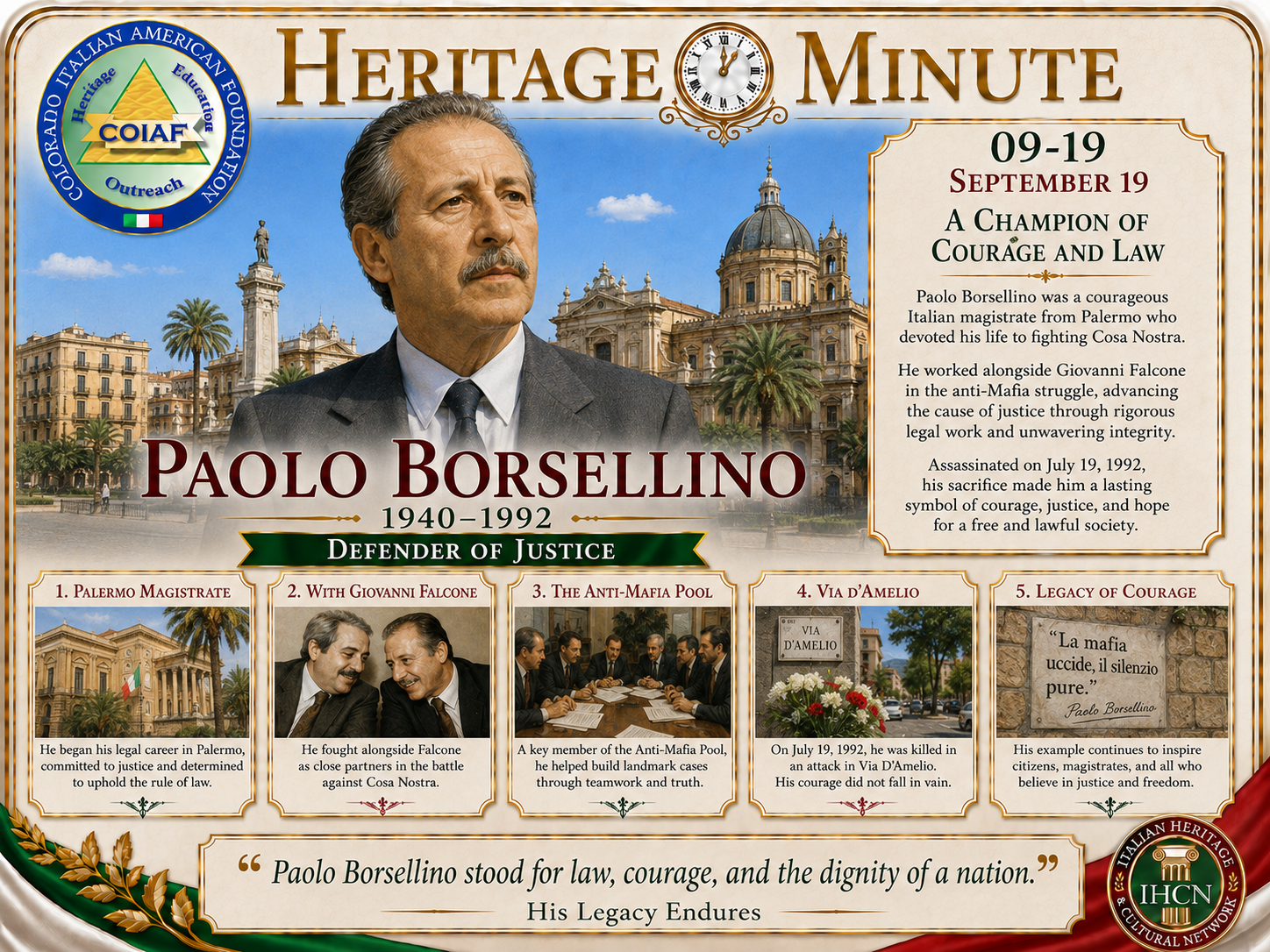
In the summer of 1992, Paolo Borsellino knew the danger surrounding him had become immediate. His friend and colleague Giovanni Falcone had been assassinated only weeks earlier, yet Borsellino refused to withdraw from public life or abandon his work. He continued investigating, speaking openly, and defending the institutions of justice even as the threat against him intensified.
Born in Palermo in 1940, Borsellino had spent much of his career confronting the criminal power of Cosa Nostra. Working alongside Falcone and other members of Palermo’s anti-Mafia team, he helped turn isolated investigations into a coordinated judicial campaign. Their work demonstrated that organized crime was not untouchable: its networks could be exposed, its members prosecuted, and its culture of fear challenged by law.
On July 19, 1992, only fifty-seven days after Falcone’s death, Borsellino and five members of his police escort were killed by a car bomb in Via D’Amelio in Palermo. His murder was intended to silence another determined opponent of the Mafia. Instead, Borsellino became an enduring symbol of civic courage—the magistrate who understood the danger, knew the personal cost, and continued because surrendering to intimidation would have meant surrendering the rule of law itself.