August 23 • Lorenzo de’ Medici
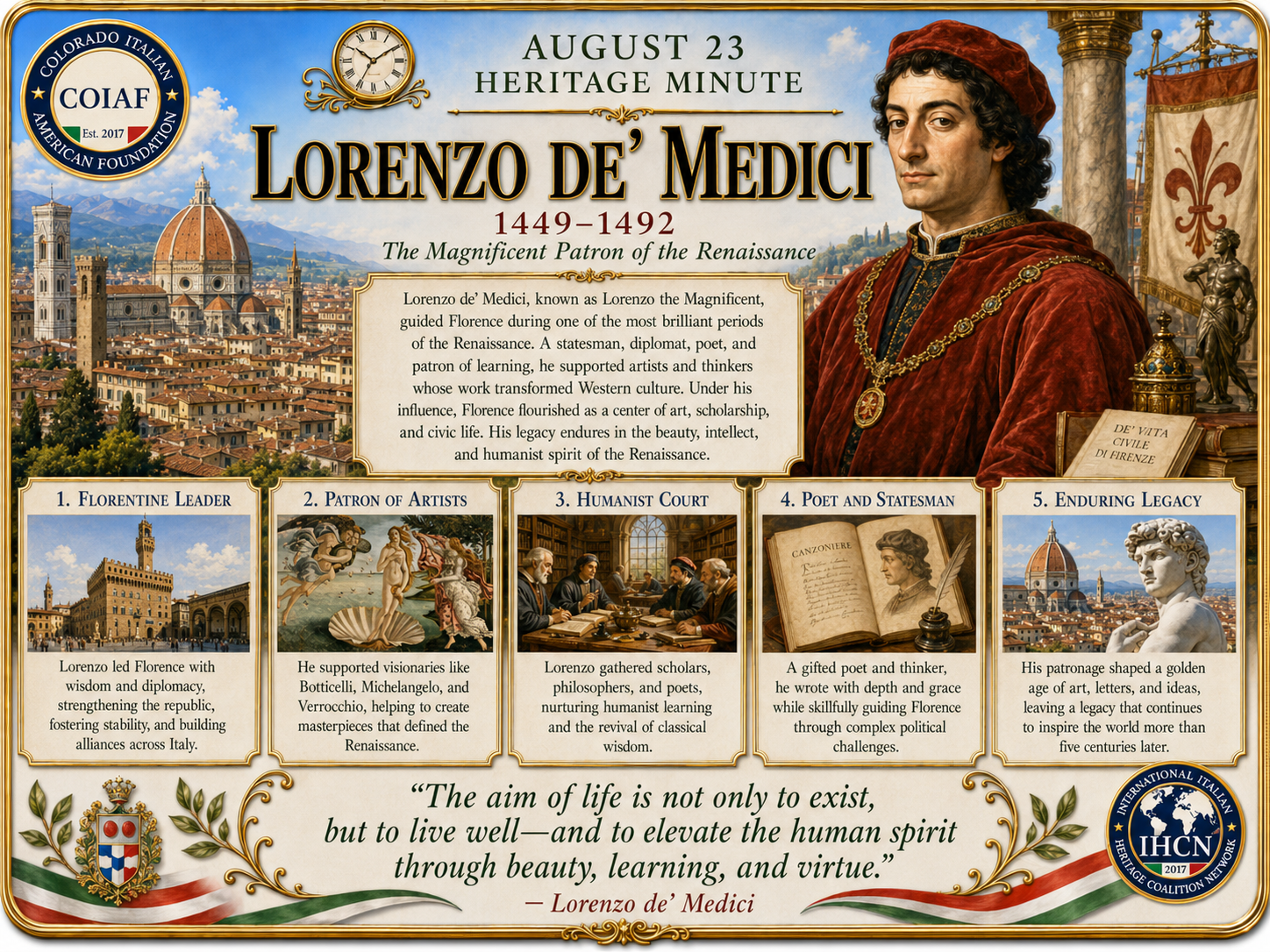
Lorenzo de’ Medici, born in Florence in 1449, became one of the central figures of the Italian Renaissance. Known as Lorenzo the Magnificent, he combined political leadership with a deep commitment to art, learning, and civic life.
As head of the Medici family, he helped guide Florence through a brilliant cultural age. He supported artists such as Botticelli and Michelangelo, encouraged scholars and poets, and strengthened the city’s role as a centre of humanist thought and creativity.
Lorenzo was also a poet and statesman whose influence extended beyond Florence. He died in 1492, leaving a legacy of beauty, intellect, and patronage that helped shape the Renaissance and elevate Western culture.
August 21 • Amedeo Avogadro
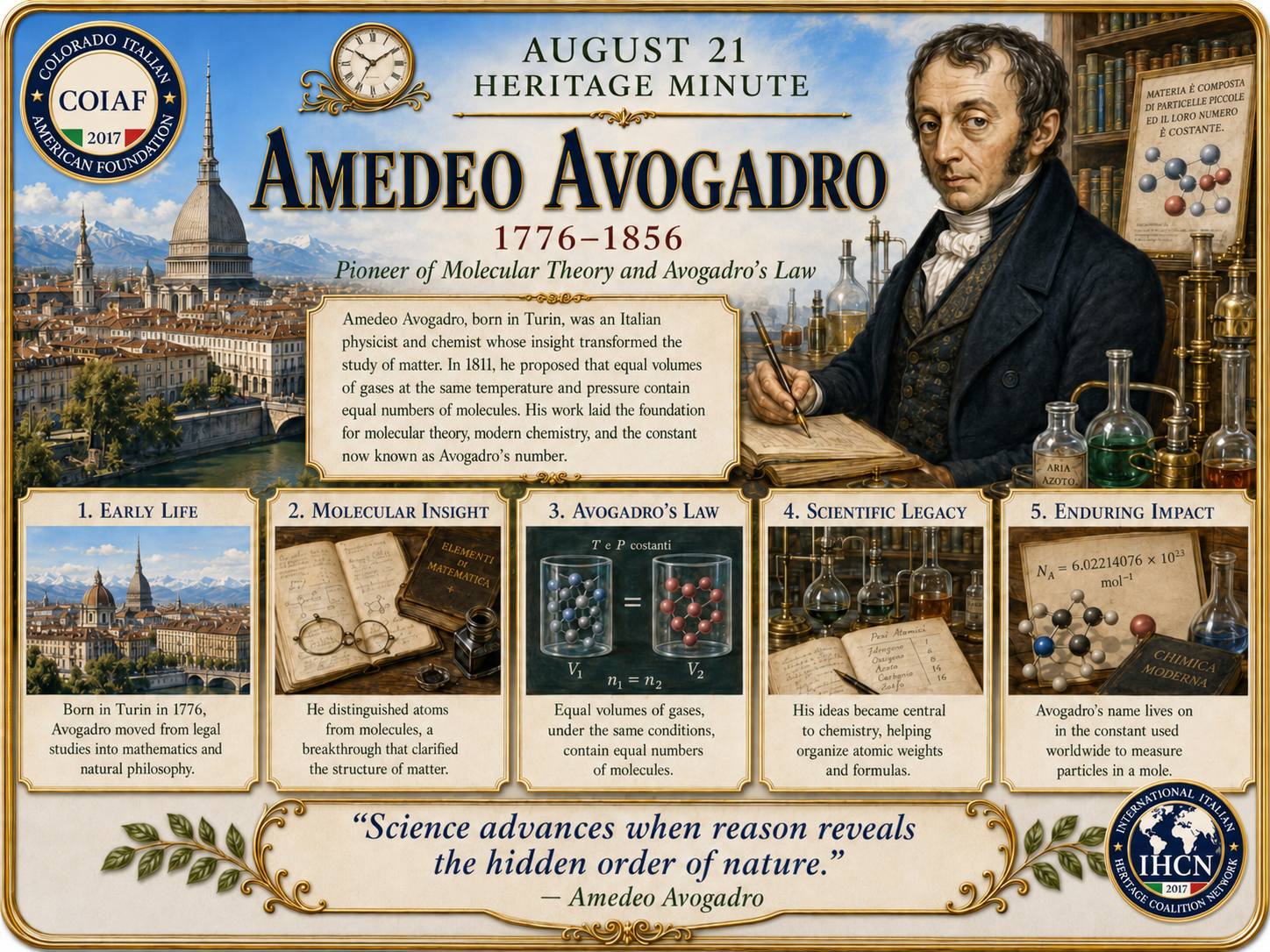
Amedeo Avogadro, born in Turin in 1776, was an Italian physicist and chemist whose ideas helped transform the study of matter. Trained first in law, he turned to science and in 1811 proposed a profound insight: equal volumes of gases, at the same temperature and pressure, contain equal numbers of molecules.
This principle, now known as Avogadro’s Law, helped distinguish atoms from molecules and laid a foundation for modern chemistry. Although his work was not fully appreciated during his lifetime, later scientists recognized its importance for atomic theory, molecular structure, and chemical formulas.
Avogadro died in 1856, and his name now lives on in Avogadro’s constant, one of the most important quantities in science.