
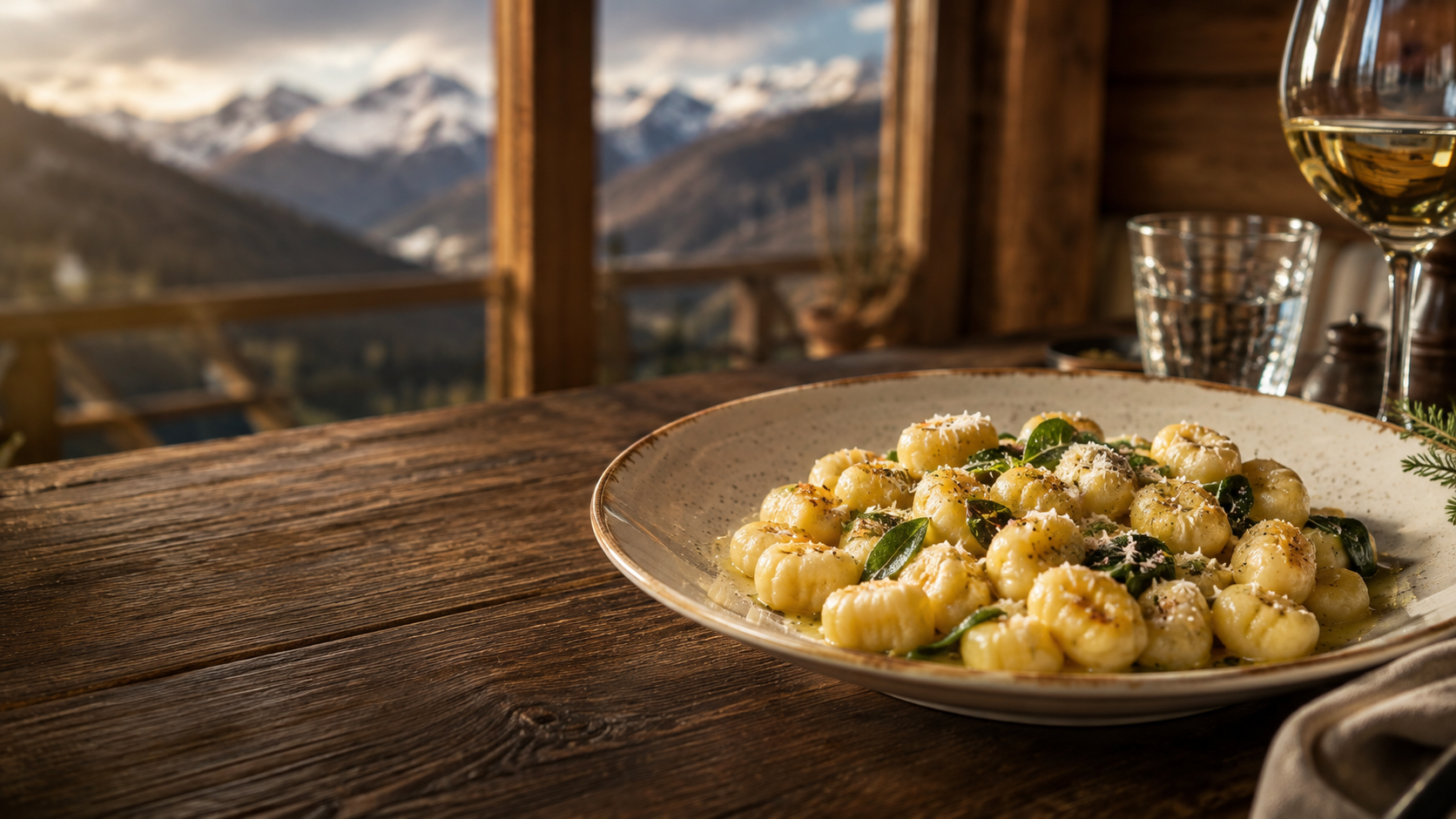
Gnocchi al Burro e Salvia
Key Ingredients
The northern essentials • potatoes, flour, sage, and butter


Soft Potato Gnocchi with a Fragrant Northern Italian Finish
Gnocchi al Burro e Salvia rewards restraint. Dry potatoes and minimal flour create tender dumplings, while golden butter, fresh sage, Parmigiano-Reggiano, and a splash of starchy cooking water form a sauce that coats without concealing their delicate potato flavor.
A Broad Italian Tradition with Deep Northern Roots
Italy has many kinds of gnocchi made from potatoes, flour, semolina, bread, ricotta, squash, and other regional ingredients. Potato gnocchi became especially associated with northern regions such as Veneto and Piedmont, where they are commonly served as a first course. Butter and sage provide one of the simplest and most elegant finishes: the warm herb perfumes the butter, Parmigiano adds savoriness, and the sauce leaves the gnocchi’s soft potato character clearly intact.
Ingredients
For the Potato Gnocchi
- 1 kg / about 2¼ pounds dry, starchy potatoes of similar size Russet or another mature floury variety works well.
- 220–260 g / about 1¾–2 cups Italian “00” flour or all-purpose flour, plus more for dusting
- 1 small egg, lightly beaten
- ½ teaspoon fine sea salt
For the Butter and Sage
- 120 g / about 8 tablespoons unsalted butter
- 16–18 fresh sage leaves
- 80 g / about ¾ cup finely grated Parmigiano-Reggiano, plus more for serving
- Freshly ground black pepper
- ½ cup reserved gnocchi cooking water, as needed
Equipment
- Potato ricer or food mill
- Bench scraper
- Gnocchi board or dinner fork
- Wide skillet
Preparation
- Cook the potatoes without peeling. Scrub the potatoes and boil them gently in their skins until completely tender, usually 30–40 minutes depending on size. Keeping the skins intact limits water absorption. Baking the potatoes at 400°F / 205°C is an excellent drier alternative.
- Peel and rice while hot. Drain the potatoes and peel them as soon as they can be handled safely. Pass them through a potato ricer onto a broad, clean work surface. Never use a food processor, which makes the potatoes gluey.
- Allow steam to escape. Spread the riced potatoes into a shallow layer for 3–5 minutes. They should remain warm while releasing visible steam and excess moisture.
- Form a soft dough. Sprinkle the potatoes with salt, add the beaten egg, and distribute about 220 grams of flour over the surface. Fold and press gently with a bench scraper and your hands just until the dough holds together.
- Test before adding more flour. Shape one small test gnocco and boil it. When it holds its form, stop adding flour. When it breaks apart, work another tablespoon of flour into the dough and test again.
- Roll and cut. Divide the dough into manageable pieces. On a lightly floured surface, roll each piece into a rope approximately ¾ inch / 2 centimeters thick. Cut into pillows approximately ¾ inch long.
- Create the traditional texture. Roll each piece lightly over a floured gnocchi board or the back of a fork. Use your thumb to create ridges on one side and a shallow hollow on the other.
- Prepare the sage butter. Melt the butter in a wide skillet over medium heat. Add the sage leaves and cook until the butter foams, smells nutty, and develops light golden milk solids. Lower the heat before the butter becomes dark or bitter.
- Boil gently in batches. Bring a broad pot of well-salted water to a gentle boil. Add only enough gnocchi to move freely. Once they rise to the surface, cook for approximately 20–30 seconds longer, then lift them out with a slotted spoon.
- Finish in the skillet. Transfer the gnocchi directly to the sage butter. Add a small splash of cooking water and toss very gently until glossy. Remove from the heat, add Parmigiano-Reggiano and black pepper, and serve immediately.
Less Moisture and Less Flour Create Lighter Gnocchi
Choose Mature Potatoes
Young or waxy potatoes contain more moisture and demand more flour. Older starchy potatoes produce a lighter, more potato-forward dough.
Rice While Hot
Hot potatoes pass cleanly through a ricer and release steam. Cold mashed potatoes become denser and are harder to combine without overworking.
Never Knead Like Bread
Gnocchi dough should be folded and pressed only until cohesive. Extended kneading develops gluten and produces an elastic, chewy result.
Use the Test-Gnocco Method
Potato moisture varies from batch to batch. A single boiled test piece determines whether the dough needs more flour more reliably than a fixed measurement.
The Egg Is Adjustable
This home recipe uses one small egg for dependable binding. Very dry potatoes may need only a yolk or no egg, while wetter potatoes may require slightly more flour.
Freeze Before Storing
Arrange uncooked gnocchi in one layer on a floured tray and freeze until solid. Transfer to a container and boil directly from frozen without thawing.
Find Ingredients and Vendors in Your Area
This recipe page is prepared for a future connection to participating Italian markets, potato growers, herb farms, cheese retailers, specialty-food vendors, and COIAF Marketplace listings. The sourcing feature will be activated when the retailer and vendor program is ready.
Cultural and Culinary References
- Treccani: Gnocco — Italian meaning and regional culinary tradition
- La Cucina Italiana: Traditional Potato Gnocchi
- La Cucina Italiana: How to Make Soft and Fluffy Gnocchi
- La Cucina Italiana: Classic Butter, Sage, and Parmigiano Dressing
- Ingredient photography: potatoes by Dezidor, licensed under CC BY 3.0; flour by ParentingPatch / AnonymousPhotog, licensed under CC BY-SA 3.0; sage leaves by Andrew Smith, licensed under CC BY-SA 2.0; and butter by The Digital Pimp, licensed under CC BY 2.0. Photographs were cropped and embedded for reliable display.
This COIAF home-kitchen adaptation uses one small egg for dependable binding, while Italian potato-gnocchi formulas vary by region, potato moisture, flour, and household practice. The final flour quantity should always be determined by the potatoes and confirmed with a test gnocco rather than forced to match a fixed measurement.