
Linguine al Pesto Genovese
Key Ingredients
The Genovese essentials • seven ingredients, worked gently and served uncooked


Genoa’s Fragrant Green Masterpiece
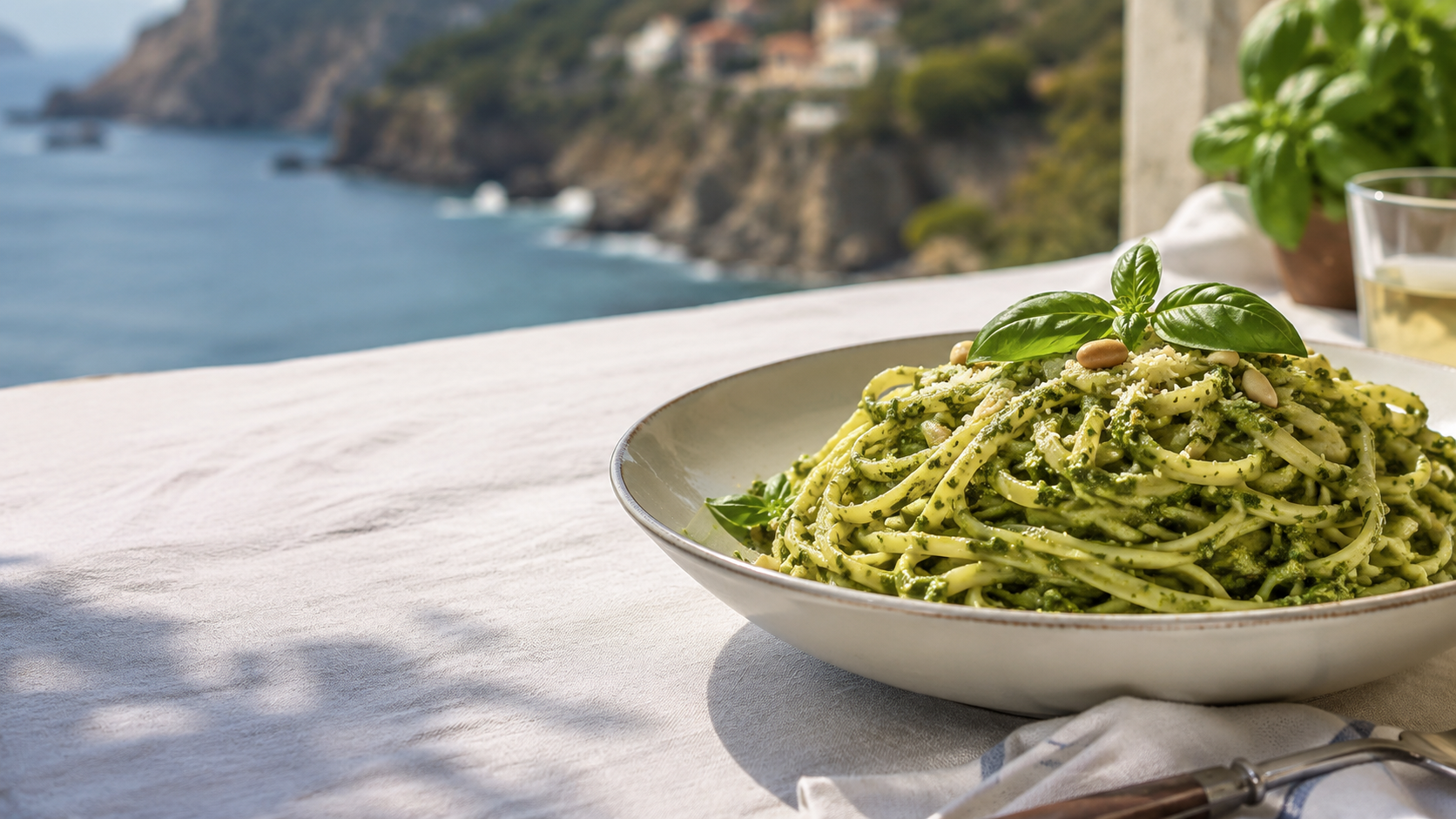
Linguine al Pesto Genovese depends on freshness, restraint, and temperature. Basil, garlic, pine nuts, two cheeses, olive oil, and salt are worked into a fragrant sauce that is never cooked. Warm pasta water loosens the pesto just enough to coat every strand of linguine.
The Defining Sauce of Genoa
Pesto alla Genovese is inseparable from Genoa and the Ligurian coast. Its name comes from the action of crushing ingredients in a mortar, and the traditional method uses a marble mortar with an olive-wood pestle. Genoa’s official recipe identifies seven ingredients: Genovese basil, garlic, pine nuts, Parmigiano or Grana, Pecorino Sardo, extra-virgin olive oil, and coarse salt. The sauce may accompany several Ligurian pasta shapes; linguine provides a familiar long-pasta presentation that carries the pesto beautifully.
Ingredients
For the Pesto Genovese
- 60–70 g / about 3 packed cups fresh Genovese basil leaves Small-leaf Basilico Genovese DOP is the traditional choice.
- 1 small garlic clove Vessalico garlic is traditional for its delicate character.
- 30 g / about 3 tablespoons raw Mediterranean pine nuts
- 50 g / about ½ cup finely grated Parmigiano-Reggiano
- 25 g / about ¼ cup finely grated Pecorino Sardo or Fiore Sardo
- 80 ml / ⅓ cup light, fruity extra-virgin olive oil Riviera Ligure DOP is ideal.
- ½ teaspoon coarse sea salt, or to taste
For the Pasta
- 400 g / about 14 ounces dry linguine
- Fine sea salt for the cooking water
- ½–1 cup reserved pasta water
Optional Ligurian Variation
- 1 small waxy potato, peeled and diced
- 115 g / 4 ounces green beans, trimmed and cut into short lengths
Preparation
- Prepare the basil carefully. Separate the leaves from their stems. Rinse them quickly only when necessary, then spread them on a clean cloth and dry completely. Avoid rubbing, bruising, or leaving water on the leaves.
- Crush garlic and salt. Place the garlic and several grains of coarse salt in a marble mortar. Work with the pestle until the garlic becomes smooth and creamy.
- Add the pine nuts. Add the raw pine nuts and continue crushing until they form a coarse paste with the garlic.
- Work in the basil gradually. Add a small handful of leaves at a time. Rotate the pestle gently along the mortar walls rather than striking downward aggressively. Continue until all the leaves are incorporated and the mixture is fragrant and creamy.
- Add both cheeses. Work in the Parmigiano-Reggiano and Pecorino Sardo until the pesto becomes evenly combined and slightly thicker.
- Finish with olive oil. Pour in the extra-virgin olive oil slowly at room temperature while mixing with the pestle or a wooden spoon. Stop when the pesto is smooth and fluid but not oily.
- Cook the optional vegetables. When using potato and green beans, add the diced potato to the boiling salted water several minutes before the pasta. Add the green beans according to their tenderness so both finish with the linguine.
- Cook the linguine. Add the linguine to well-salted boiling water and cook until al dente. Reserve at least 1 cup of pasta water before draining.
- Loosen the pesto off the heat. Place the pesto in a broad serving bowl. Stir in 2–3 tablespoons of warm pasta water until the sauce becomes creamy and easy to distribute.
- Toss and serve immediately. Add the hot linguine and toss thoroughly away from direct heat. Add more pasta water only as needed. Finish with a restrained drizzle of olive oil and a little Parmigiano-Reggiano.
Protect the Basil from Heat and Oxidation
Never Cook the Pesto
Direct heat darkens the basil, dulls its fragrance, and can make the cheese separate. Combine the pesto and pasta away from the burner.
Dry Basil Completely
Water dilutes the sauce and accelerates discoloration. Handle the leaves gently and allow them to dry fully before crushing.
Do Not Toast the Pine Nuts
The official Genovese structure uses raw pine nuts. Toasting adds a dominant roasted flavor that changes the sauce’s delicate balance.
Garlic Belongs in the Recipe
The quantity may be reduced for personal taste, but removing garlic entirely changes the traditional flavor described by Genoa’s official recipe.
A Blender Must Stay Cool
When a mortar is unavailable, use a small blender and short pulses. Chilling the bowl and blade helps limit heat and oxidation.
Pasta Water Creates the Sauce
A few spoonfuls of warm, starchy cooking water loosen the pesto and help it cling evenly without requiring excessive olive oil.
Find Ingredients and Vendors in Your Area
This recipe page is prepared for a future connection to participating Italian markets, basil growers, olive-oil producers, cheese retailers, specialty-food vendors, and COIAF Marketplace listings. The sourcing feature will be activated when the retailer and vendor program is ready.
Cultural and Culinary References
- Visit Genoa, official city tourism portal: Pesto alla Genovese — ingredients and traditional mortar method
- Consorzio di Tutela del Basilico Genovese DOP: How to Make Genoese Pesto
- Ingredient photography: basil by NeoMeesje, licensed under CC BY-SA 4.0; pine nuts by Burgkirsch, licensed under CC BY-SA 2.0 DE; Parmigiano-Reggiano by Jon Sullivan, public domain; and extra-virgin olive oil by Mervat Salman, licensed under CC BY-SA 4.0. Photographs were cropped and embedded for reliable display.
This COIAF home-kitchen adaptation follows the official seven-ingredient Pesto Genovese structure and traditional no-heat preparation. Linguine is used as the selected pasta for this Taste of Italy page; Genoese tradition also pairs pesto with trofie, trenette, mandilli, gnocchi, lasagne, and other regional forms.