September 13 • Giovanni Boccaccio
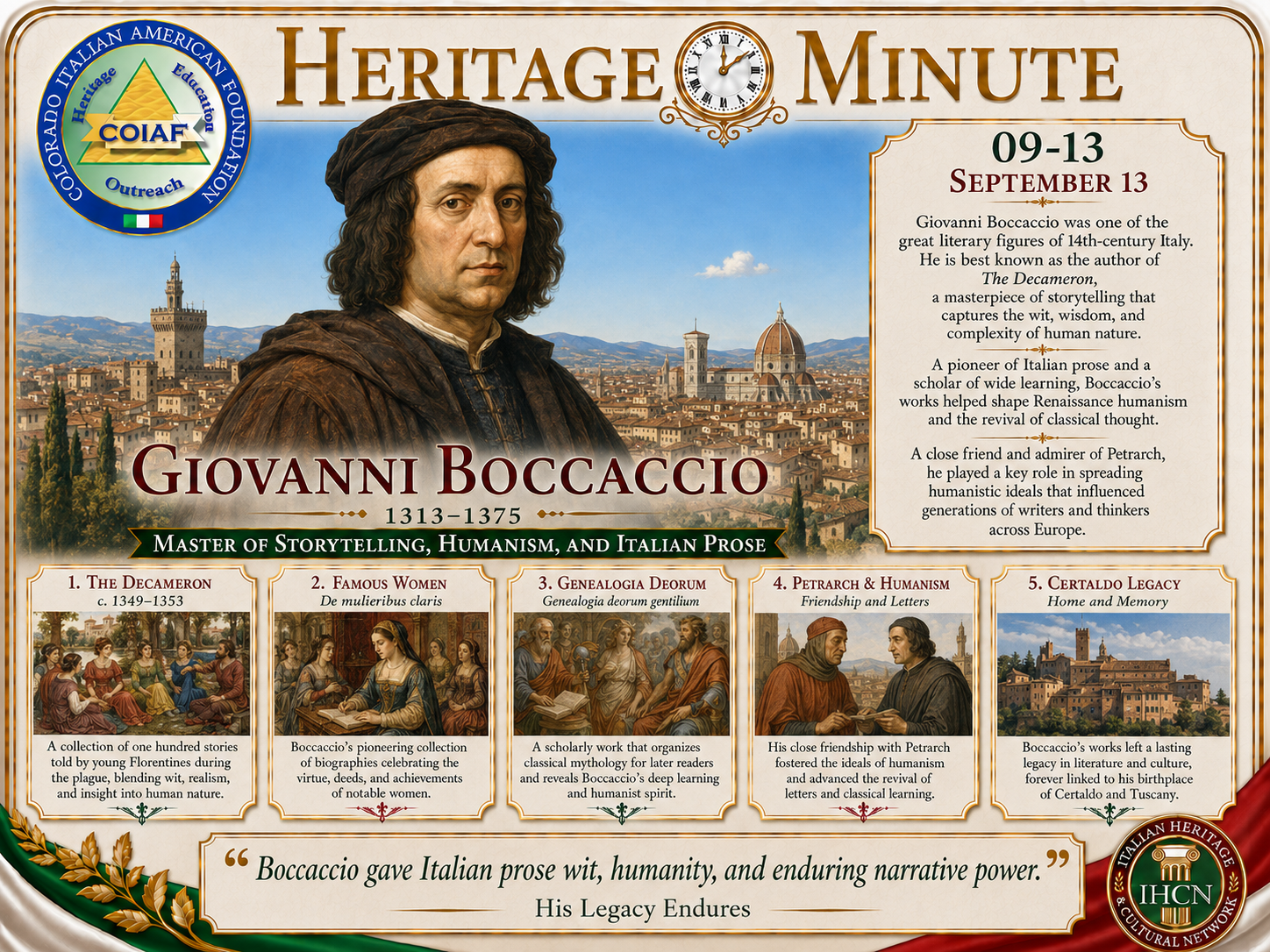
Giovanni Boccaccio, born in 1313, became one of the great literary figures of medieval and early Renaissance Italy. A poet, scholar, humanist, and master storyteller, he helped establish Italian prose as a powerful literary language capable of expressing humor, tragedy, wisdom, romance, and the extraordinary complexity of everyday human life.
His masterpiece, The Decameron, brings together one hundred stories told by a group of young Florentines seeking refuge from the plague. Through merchants, nobles, clergy, lovers, tricksters, and ordinary citizens, Boccaccio created a vivid portrait of society filled with wit, compassion, irony, and remarkable psychological insight.
Boccaccio was also a devoted scholar of classical literature and an important friend of Petrarch. His writings on mythology, history, and notable women helped preserve and revive ancient learning while contributing to the growth of Renaissance humanism. His influence spread across Europe and shaped generations of writers who followed.