
Tagliatelle al Ragù
Key Ingredients
The Bolognese essentials • fresh pasta and patient cooking


Bologna’s Definitive Pasta Pairing
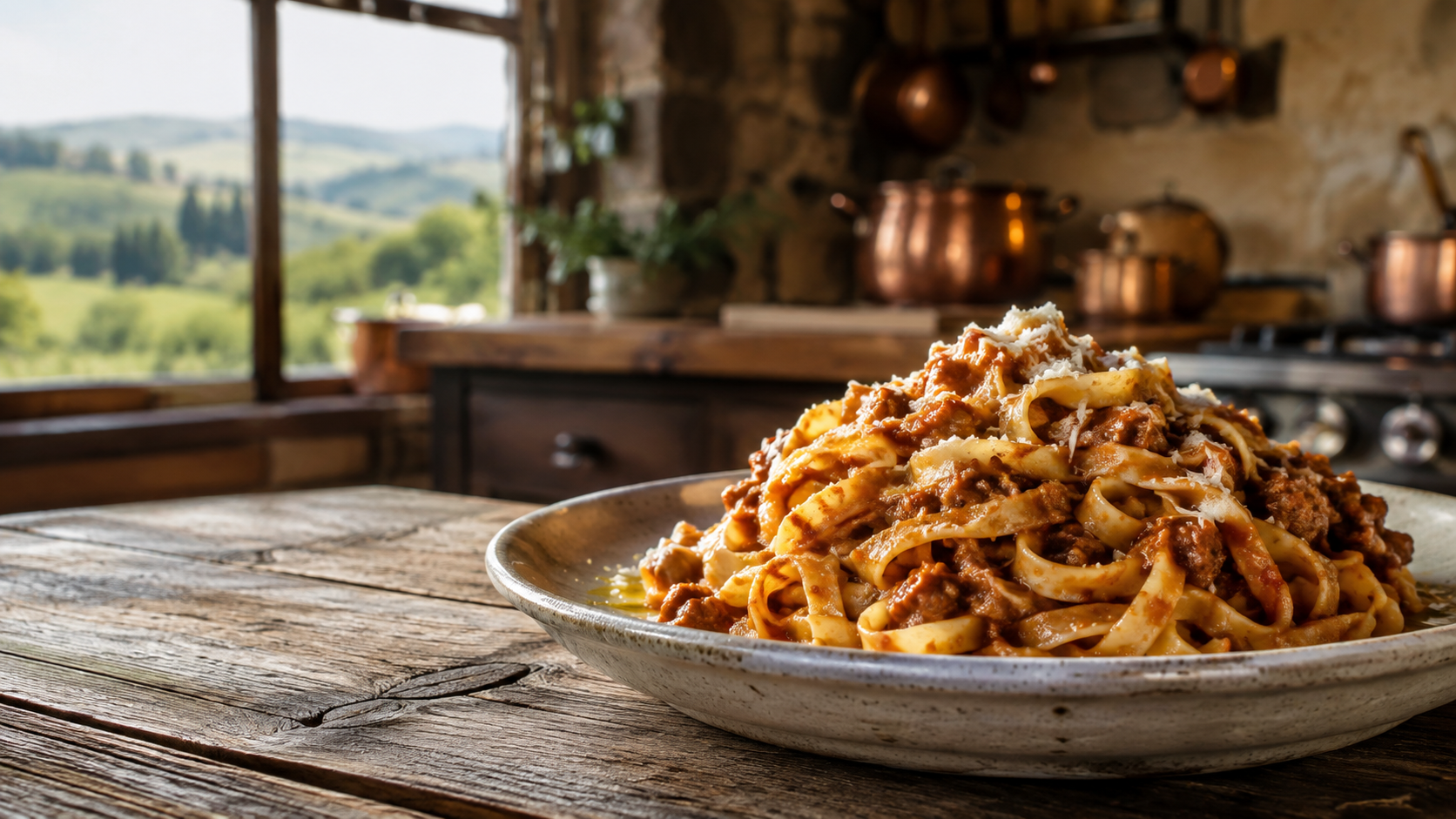
Tagliatelle al Ragù brings together two pillars of Bolognese cooking: tender ribbons of fresh egg pasta and a deeply flavored meat sauce that develops slowly over several hours. The result is rich, balanced, and far more restrained than the tomato-heavy sauces often labeled “Bolognese.”
The Pasta Bologna Serves with Ragù
In Bologna, ragù is traditionally paired with fresh egg tagliatelle rather than dried spaghetti. The broad ribbons carry the thick, glossy sauce and preserve the character of both pasta and meat. Bologna Welcome identifies Tagliatelle al Ragù as a characteristic local dish and describes it as part of the city’s protected municipal culinary heritage. The Italian Academy of Cuisine registered an updated reference formula for real Ragù alla Bolognese with the Bologna Chamber of Commerce on April 20, 2023.
Ingredients
For the Ragù alla Bolognese
- 400 g / 14 ounces coarsely ground beef Chuck, shoulder, brisket, or another collagen-rich cut is ideal.
- 150 g / 5 ounces fresh pork pancetta, finely chopped Use unsmoked pancetta—not smoked bacon.
- 60 g / about ½ cup onion, finely chopped
- 60 g / about ½ cup carrot, finely chopped
- 60 g / about ½ cup celery, finely chopped
- 120 ml / ½ cup dry red or white wine
- 200 g / about ¾ cup strained tomatoes or passata
- 1 tablespoon double-concentrated tomato paste
- 120 ml / ½ cup whole milk Optional in the updated official formula, but traditionally used.
- 1–2 cups light meat or vegetable broth, kept hot
- 3 tablespoons extra-virgin olive oil
- Fine sea salt and freshly ground black pepper
For the Pasta and Serving
- 500 g / about 18 ounces fresh tagliatelle
- Fine sea salt for the pasta water
- 75 g / about ¾ cup finely grated Parmigiano-Reggiano, plus more at the table
Optional Homemade Tagliatelle
- 500 g / about 4 cups Italian “00” flour
- 5 large eggs
- A small pinch of fine sea salt
Preparation
- Render the pancetta. Place the finely chopped pancetta and olive oil in a heavy 10-inch casserole or Dutch oven. Cook over medium-low heat until the pancetta begins to soften and release its fat.
- Build the soffritto. Add the onion, carrot, and celery. Cook slowly, stirring with a wooden spoon, until the vegetables are tender and aromatic but have not browned, about 8–10 minutes.
- Brown the beef. Raise the heat to medium. Add the beef, break it into small pieces, and cook while stirring until it sizzles and takes on color, about 10 minutes.
- Evaporate the wine. Pour in the wine and continue cooking until it has evaporated completely. No sharp alcoholic aroma should remain.
- Add tomato and broth. Stir in the tomato paste and strained tomatoes. Add about 1 cup of hot broth, mix thoroughly, and bring the ragù to a very gentle simmer.
- Cook slowly. Cover partially and simmer for 2–3 hours. Stir periodically and add small quantities of hot broth whenever the sauce begins to dry before the meat is tender.
- Add milk when using. Stir in the milk about halfway through the cooking time. Allow it to absorb and evaporate completely as the ragù continues to simmer.
- Finish the ragù. Season with salt and black pepper. The completed sauce should be thick, glossy, and deep reddish-brown rather than loose or heavily tomato-based.
- Cook the tagliatelle. Bring a large pot of well-salted water to a boil. Add the fresh tagliatelle and cook until tender but resilient, generally 2–4 minutes depending on thickness. Reserve about 1 cup of pasta water before draining.
- Toss and serve. Return the pasta to the warm pot or a broad sauté pan. Add enough ragù to coat every ribbon and toss gently, adding a small splash of reserved pasta water when needed. Finish with Parmigiano-Reggiano and serve immediately.
The Bolognese Details That Matter
Tagliatelle, Not Spaghetti
Fresh egg tagliatelle is Bologna’s traditional partner for ragù. Its broad, slightly porous ribbons hold the thick meat sauce far better than smooth dried spaghetti.
Keep Tomato in Balance
Authentic ragù alla Bolognese is a meat sauce supported by tomato—not a tomato sauce containing meat. The finished color should be deep and muted rather than bright red.
No Garlic or Herbs
The Academy’s updated reference formula excludes garlic, rosemary, parsley, and other herbs or spices. The flavor comes from meat, pancetta, soffritto, wine, tomato, and time.
Use Unsmoked Pancetta
Fresh or cured pancetta is appropriate; smoked bacon is not. Smoke changes the character of the sauce and overwhelms its restrained Bolognese profile.
The Milk Is Subtle
Milk is optional in the 2023 reference recipe, but it has traditional precedent. It softens the sauce and is cooked until fully absorbed rather than left creamy.
Even Better the Next Day
The ragù may be prepared one or two days ahead and refrigerated. Reheat it slowly with a splash of broth before tossing with freshly cooked tagliatelle.
Find Ingredients and Vendors in Your Area
This recipe page is prepared for a future connection to participating Italian markets, specialty-food retailers, local ingredient sources, and COIAF Marketplace listings. The sourcing feature will be activated when the retailer and vendor program is ready.
Cultural and Culinary References
- Accademia Italiana della Cucina: Updated Recipe for Real Ragù alla Bolognese, deposited April 20, 2023
- Bologna Welcome, official city tourism portal: Tagliatelle al Ragù
- Bologna Welcome: Ragù alla Bolognese
- Ingredient photography: pasta by Olga Petnyunene; ground meat by Iryna Zaitseva; soffritto vegetables by Chris Linnett; and Parmigiano-Reggiano by Caroline Roose.
This COIAF home-kitchen adaptation follows the Italian Academy of Cuisine’s updated 2023 reference formula for Ragù alla Bolognese and Bologna Welcome’s traditional fresh-tagliatelle method. Quantities are organized as a practical six-serving household batch; family formulas and pasta thickness naturally vary.