September 16 • Umberto Eco
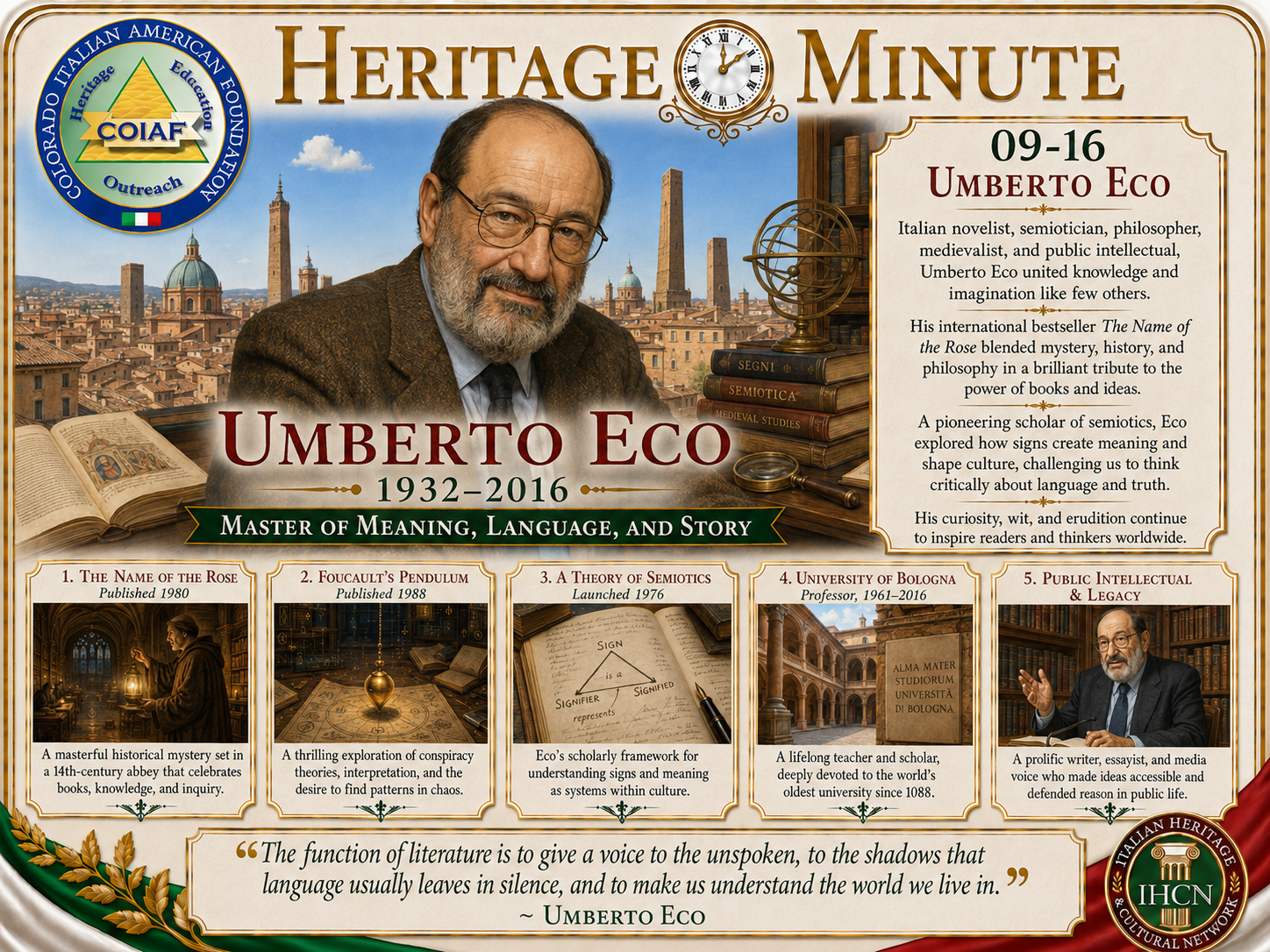
Umberto Eco, born in Alessandria in 1932, became one of Italy’s most celebrated modern intellectuals. A novelist, philosopher, medieval scholar, literary critic, and pioneering semiotician, Eco devoted his career to exploring how language, symbols, books, history, and culture shape the way human beings understand the world.
His international bestseller The Name of the Rose transformed medieval history, philosophy, theology, and a murder mystery into a remarkable meditation on knowledge and interpretation. He followed it with works including Foucault’s Pendulum, while his scholarly writing, particularly A Theory of Semiotics, examined how signs and symbols create and communicate meaning.
Eco spent decades teaching at the University of Bologna and became a distinctive public voice on literature, media, language, culture, and intellectual freedom. With curiosity, wit, skepticism, and enormous learning, he encouraged readers to question appearances, examine evidence, and understand the powerful relationship between stories and ideas.