
Cannoli Siciliani
Key Ingredients
The Sicilian essentials • fill just before serving


Crisp Shells, Silky Ricotta, and Sicilian Celebration
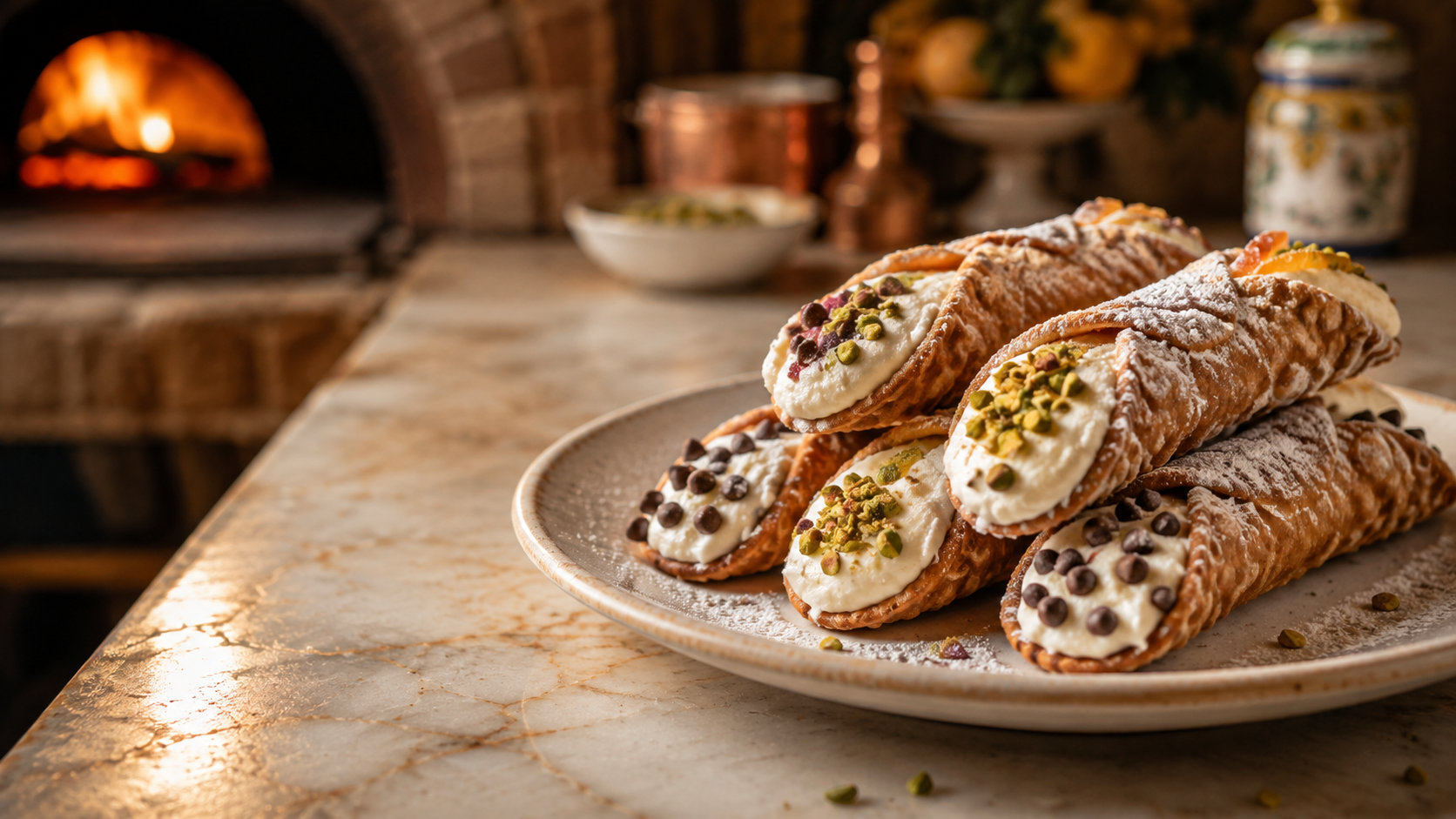
Cannoli Siciliani pair delicate fried pastry shells with a cool, lightly sweetened ricotta filling. Pistachios, dark chocolate, candied orange, and confectioners’ sugar provide the colorful finish associated with Sicily’s celebrated pastry tradition.
From Carnival Treat to Sicilian Icon
Cannoli were traditionally associated with Carnival, but their popularity carried them far beyond the holiday season. The crisp shells were historically formed around pieces of cane and are now shaped on metal tubes. Filled with sweet ricotta and decorated only at the end, cannoli have become one of the most recognizable expressions of Sicilian confectionery.
Ingredients
For the Shells
- 150 g Italian type “00” flour (about 1¼ cups)
- 50 g granulated sugar (¼ cup)
- 25 g lard or unsalted butter, softened (about 2 tablespoons)
- 10 g unsweetened cocoa powder (about 1½ tablespoons)
- 1 large egg
- 1 tablespoon Marsala or dry white wine, plus more only if needed
- ¼ teaspoon fine sea salt
- 1 egg white, lightly beaten, for sealing
- Neutral high-heat oil or refined olive oil, for frying
For the Ricotta Filling
- 500 g sheep’s-milk ricotta, thoroughly drained (about 2 cups)
- 150 g granulated or superfine sugar (¾ cup)
- 1 teaspoon vanilla extract (optional)
- 50 g finely chopped dark chocolate or mini chocolate pieces
- 30 g pistachios, finely chopped
- Candied orange peel, for garnish
- Confectioners’ sugar, for dusting
Helpful Equipment
- Metal cannoli tubes
- Pasta machine or rolling pin
- Deep-fry thermometer
- Fine-mesh sieve
- Piping bag with a wide tip
Preparation
- Drain the ricotta. Place the ricotta in a fine strainer over a bowl and refrigerate for at least 4 hours, preferably overnight.
- Mix the shell dough. Combine the flour, sugar, cocoa, and salt. Work in the lard or butter, then add the egg and Marsala. Knead until the dough is smooth and firm, adding only a few drops of wine if it is too dry.
- Rest the dough. Wrap and let rest at room temperature for 30 minutes.
- Roll very thin. Divide the dough and pass it through a pasta machine, finishing at approximately 1–1.5 mm thick. Cut into ovals approximately 4½ inches long.
- Shape the shells. Wrap each oval around a lightly oiled cannoli tube. Brush one edge with egg white and press the overlapping edges together without wrapping the dough too tightly.
- Fry until crisp. Heat the oil to 350°F (175°C). Fry a few shells at a time for 1–2 minutes, turning as needed, until blistered and crisp. Drain and cool briefly before removing the tubes.
- Prepare the filling. Press the drained ricotta through a fine-mesh sieve. Stir in the sugar and optional vanilla by hand until smooth, then fold in the dark chocolate.
- Fill at the last moment. Transfer the ricotta mixture to a piping bag. Pipe from both ends so the entire shell is filled, but do this only shortly before serving.
- Decorate and serve. Dip the ends in chopped pistachios, add candied orange if desired, and dust lightly with confectioners’ sugar.
Notes for the Best Result
Control the Ricotta
Excess moisture makes the filling loose. Drain it well and pass it through a fine sieve rather than using a blender or electric mixer.
Protect the Crisp Shell
Unfilled shells may be stored airtight after cooling. Fill them just before serving so the ricotta does not soften the pastry.
Roll Thin and Fry Hot
Thin dough and steady 350°F oil create the blistered, delicate shell. Cooler oil produces heavy, greasy pastry.
Tradition and Source Notes
- Regione Siciliana — Visit Sicily, Cannoli Siciliani official recipe and preparation notes
- Accademia Italiana della Cucina, Sicily regional recipe collection: Cannoli
- Italia.it, Typical Sicilian products and dishes
This is a COIAF home-kitchen adaptation based on traditional Sicilian methods. Ingredient quantities, frying oil, and timing have been organized for a practical batch of approximately twelve cannoli; regional family formulas and decorations naturally vary.