
Bistecca alla Fiorentina
Key Ingredients
The Florentine essentials • exceptional beef and absolute restraint


Florence’s Magnificent Charcoal-Grilled Steak
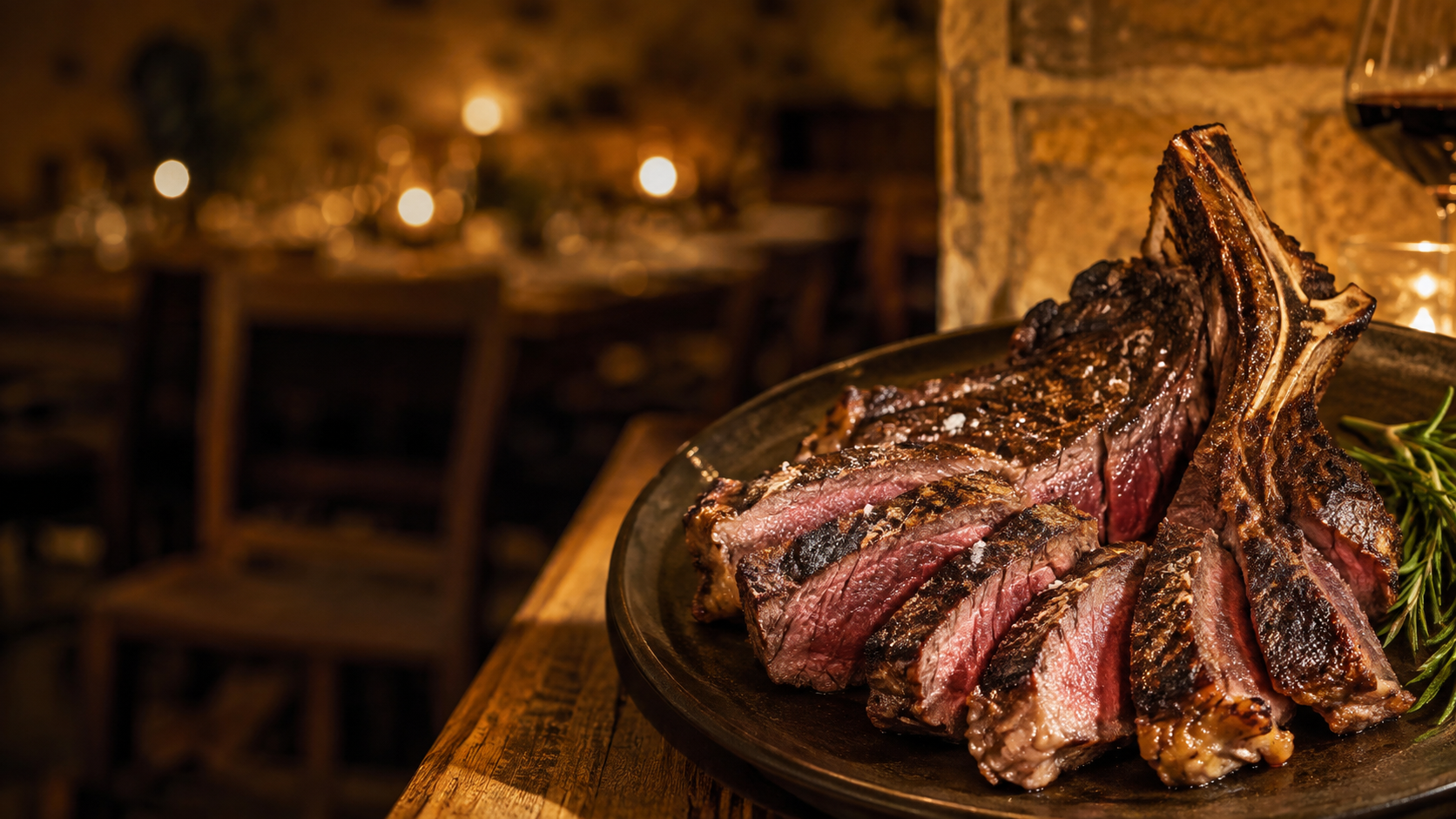
Bistecca alla Fiorentina is less a complicated recipe than a discipline: an extraordinary, exceptionally thick steak, a fiercely hot charcoal fire, one careful turn, and no seasoning until the crust has formed.
The Steak Florentines Simply Call “Bistecca”
Bistecca alla Fiorentina is cut from the loin of a young steer and recognized by its T-shaped bone, with fillet on one side and sirloin on the other. Tuscany’s official tourism authority describes the classic preparation as strictly grilled, traditionally rare, and unseasoned during cooking. Salt and pepper are added only after the steak leaves the fire. Chianina beef is historically celebrated, although the quality, maturity, thickness, and handling of the cut matter more than relying on a breed name alone.
Ingredients
For the Steak
- 1 large porterhouse or T-bone steak, 2–2¾ inches / 5–7 cm thick and approximately 2½–3¼ pounds / 1.2–1.5 kg
- Coarse sea salt, added after grilling
- Freshly ground black pepper, added after grilling
Optional Finishing
- High-quality Tuscan extra-virgin olive oil
- Fresh lemon wedges
Traditional Accompaniments
- Cannellini beans dressed with olive oil and black pepper
- Roasted or fried potatoes
- A simple green salad
- Chianti Classico or another structured Tuscan red wine
Preparation
- Temper the steak. Remove the steak from refrigeration 45–60 minutes before cooking. Keep it protected on a tray, then pat every surface thoroughly dry. Do not marinate, oil, salt, or pepper it before grilling.
- Build the fire. Prepare a very hot hardwood-charcoal fire. Allow active flames to subside so the grill sits above fiercely glowing embers rather than direct flame. Clean and heat the grate thoroughly.
- Grill the first side. Place the steak directly over the hottest part of the grill. Cook without moving it, pressing it, or piercing it for approximately 5–7 minutes, until a deeply browned crust forms.
- Turn only once. Use long tongs to turn the steak. Grill the second broad side for another 5–7 minutes. Avoid using a fork, which punctures the crust and releases juices.
- Stand it on the bone. Lift the steak upright and balance it on the T-shaped bone. Grill in this position for 4–6 minutes so heat travels inward along the bone and the thick center cooks more evenly.
- Judge doneness carefully. Traditional Fiorentina is served rare, with a well-charred exterior and a deeply red, warm center. Cooking time varies considerably with steak thickness, fire intensity, starting temperature, and distance from the embers.
- Rest briefly. Move the steak to a warm carving board and rest it uncovered for 5–10 minutes. Do not wrap it tightly in foil, which softens the crust.
- Carve around the bone. Cut the tenderloin and sirloin away from the T-bone in two large sections. Slice each section across the grain into substantial strips.
- Season after cooking. Arrange the sliced meat around the bone and season generously with coarse sea salt and freshly ground black pepper. Add only a restrained drizzle of extra-virgin olive oil when desired.
- Serve immediately. Bring the platter to the table while the crust remains hot and the interior stays juicy. Offer lemon separately rather than squeezing it over the entire steak.
The Cut, the Fire, and the Restraint
Thickness Is Non-Negotiable
A thin supermarket T-bone cooks through before developing the proper crust. Choose a steak at least two inches thick, preferably thicker.
Do Not Marinate
Traditional Fiorentina is not soaked in wine, herbs, garlic, or oil. The grill, beef, salt, and pepper should define the flavor.
Use Embers, Not Flames
Open flames burn the surface and create soot before the center warms. Wait for an intensely hot, stable bed of glowing charcoal.
Season Only at the End
The traditional Tuscan method grills the steak without seasoning. Coarse salt and pepper are applied after carving or immediately before serving.
Traditional Doneness and Safety
Florentine tradition serves the steak rare. For U.S. home food safety, USDA guidance recommends whole beef steaks reach 145°F / 62.8°C and rest at least 3 minutes.
One Steak Is Shared
Bistecca alla Fiorentina is normally ordered and served by weight, then carved for several diners rather than prepared as individual steaks.
Find Ingredients and Vendors in Your Area
This recipe page is prepared for a future connection to participating Italian markets, specialty butchers, local ingredient sources, and COIAF Marketplace listings. The sourcing feature will be activated when the retailer and vendor program is ready.
Cultural, Culinary, and Safety References
- Visit Tuscany, official regional tourism portal: Bistecca alla Fiorentina: Legends, Facts and a Recipe
- Visit Tuscany: Ten Traditional Dishes to Taste in Tuscany
- Accademia Italiana della Cucina: Firenze: La Bistecca alla Fiorentina
- USDA Food Safety and Inspection Service: Safe Minimum Internal Temperature Chart
- Ingredient photography: porterhouse steak photograph; sea salt by Relativity, licensed under CC BY-SA 4.0; extra-virgin olive oil photograph; and lemon by Evan-Amos, dedicated under CC0. The photographs are embedded for reliable display.
This COIAF home-kitchen adaptation preserves the defining Florentine method: an exceptionally thick T-bone cut, fierce charcoal heat, minimal handling, traditionally rare doneness, and seasoning only after grilling. Cooking times are estimates and must be adjusted for steak thickness, grill temperature, desired doneness, and applicable food-safety guidance.