
Pizza Margherita
Key Ingredients
The Neapolitan essentials • simple and balanced


Simplicity, Balance, and the Colors of Italy
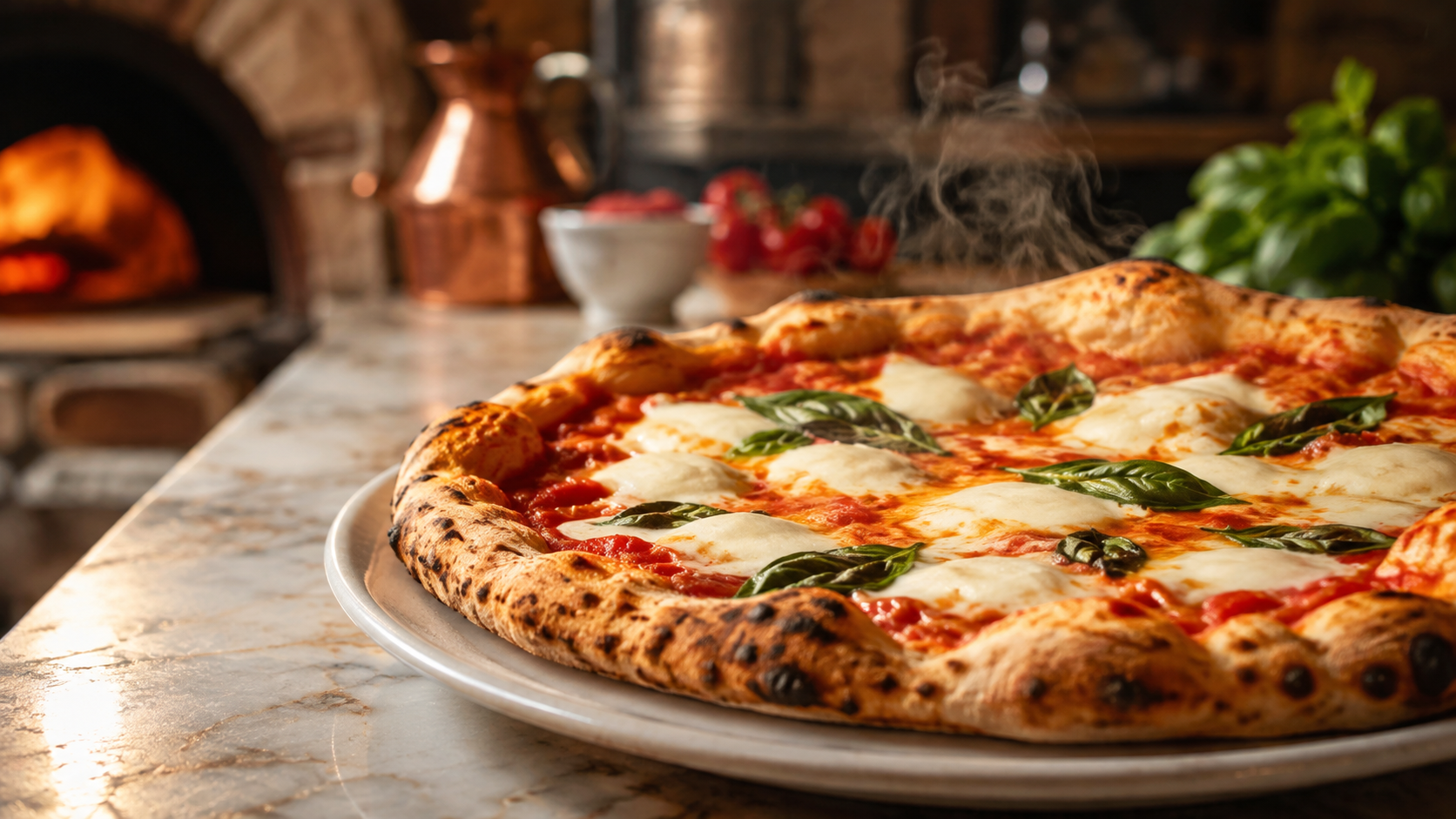
Pizza Margherita celebrates the harmony of ripe tomato, fresh mozzarella, fragrant basil, and extra-virgin olive oil. This COIAF recipe preserves that essential character while adapting the baking method for a very hot home oven.
From Naples to the World
Pizza Margherita is one of the defining expressions of Neapolitan cooking. Tradition associates its familiar tomato, mozzarella, and basil combination with Queen Margherita of Savoy and the colors of the Italian flag. Whatever the exact path of the story, the dish belongs unmistakably to Naples: soft-centered, fragrant, lightly charred, and built from only a few carefully balanced ingredients.
Ingredients
For the Dough
- 500 g Italian type “00” flour or unbleached bread flour (about 4 cups, measured by weight for best results)
- 310 g cool water (about 1⅓ cups)
- 14 g fine sea salt (about 2¼ teaspoons)
- 0.8 g instant yeast (approximately ¼ teaspoon)
For the Topping
- 280 g whole peeled tomatoes, crushed by hand
- 280 g fresh fior di latte mozzarella, cut into strips and thoroughly drained
- 20 g finely grated Parmigiano-Reggiano (optional)
- 16–20 fresh basil leaves
- 2 tablespoons extra-virgin olive oil
- Fine sea salt, as needed
Helpful Equipment
- Digital kitchen scale
- Pizza steel or pizza stone
- Pizza peel or rimless baking sheet
- Parchment paper or semolina for launching
Preparation
- Mix the dough. Dissolve the salt in the water. Add approximately one-third of the flour and stir to create a loose batter. Mix in the yeast, then gradually add the remaining flour until a rough dough forms.
- Knead until smooth. Knead by hand or with a dough hook for 8–10 minutes. The finished dough should feel smooth, elastic, and only slightly tacky.
- Begin the rise. Place the dough in a covered bowl and let it rest at room temperature for approximately 2 hours.
- Divide and ferment. Divide the dough into four equal portions of roughly 205 grams each. Shape each portion into a tight ball, cover, and refrigerate for 8–24 hours.
- Prepare the oven. Place a pizza steel or stone in the upper third of the oven. Preheat at the oven’s highest setting—ideally 525–550°F—for 45–60 minutes.
- Prepare the toppings. Crush the tomatoes by hand and season lightly with salt. Drain the mozzarella very well so excess moisture does not collect on the pizza.
- Shape without rolling. Allow one dough ball to warm at room temperature for about 60–90 minutes. Press gently from the center outward, leaving a raised rim. Stretch to approximately 10 inches without using a rolling pin.
- Top lightly. Spread about 70 grams of tomato across the dough. Add about 70 grams of mozzarella, several basil leaves, optional Parmigiano-Reggiano, and a light drizzle of olive oil.
- Bake. Transfer the pizza to the heated steel or stone. Bake for 5–7 minutes, turning once if needed, until the rim is blistered and the cheese is bubbling. Repeat with the remaining dough balls.
- Serve immediately. Finish with one fresh basil leaf and a small drizzle of extra-virgin olive oil. Slice and serve while hot.
Notes for the Best Result
Use a Light Hand
Pizza Margherita depends on restraint. Too much tomato or cheese weighs down the center and prevents the crust from baking properly.
Drain the Mozzarella
Cut fresh mozzarella several hours ahead and refrigerate it in a strainer. A drier cheese produces a cleaner, more balanced pizza.
Adapt to Your Oven
A home oven cannot fully reproduce a Neapolitan wood-fired oven. A thoroughly heated steel or stone provides the strongest practical home-kitchen result.
Tradition and Source Notes
- Associazione Verace Pizza Napoletana, International Regulations for True Neapolitan Pizza
- European Union, Pizza Napoletana Traditional Speciality Guaranteed specification
- City of Naples, Discovering Naples: Cuisine
This is a COIAF home-kitchen adaptation inspired by traditional Neapolitan principles. It is not presented as an AVPN-certified commercial formula, and baking times are adjusted for a conventional home oven.