August 6 • Antonio Stradivari
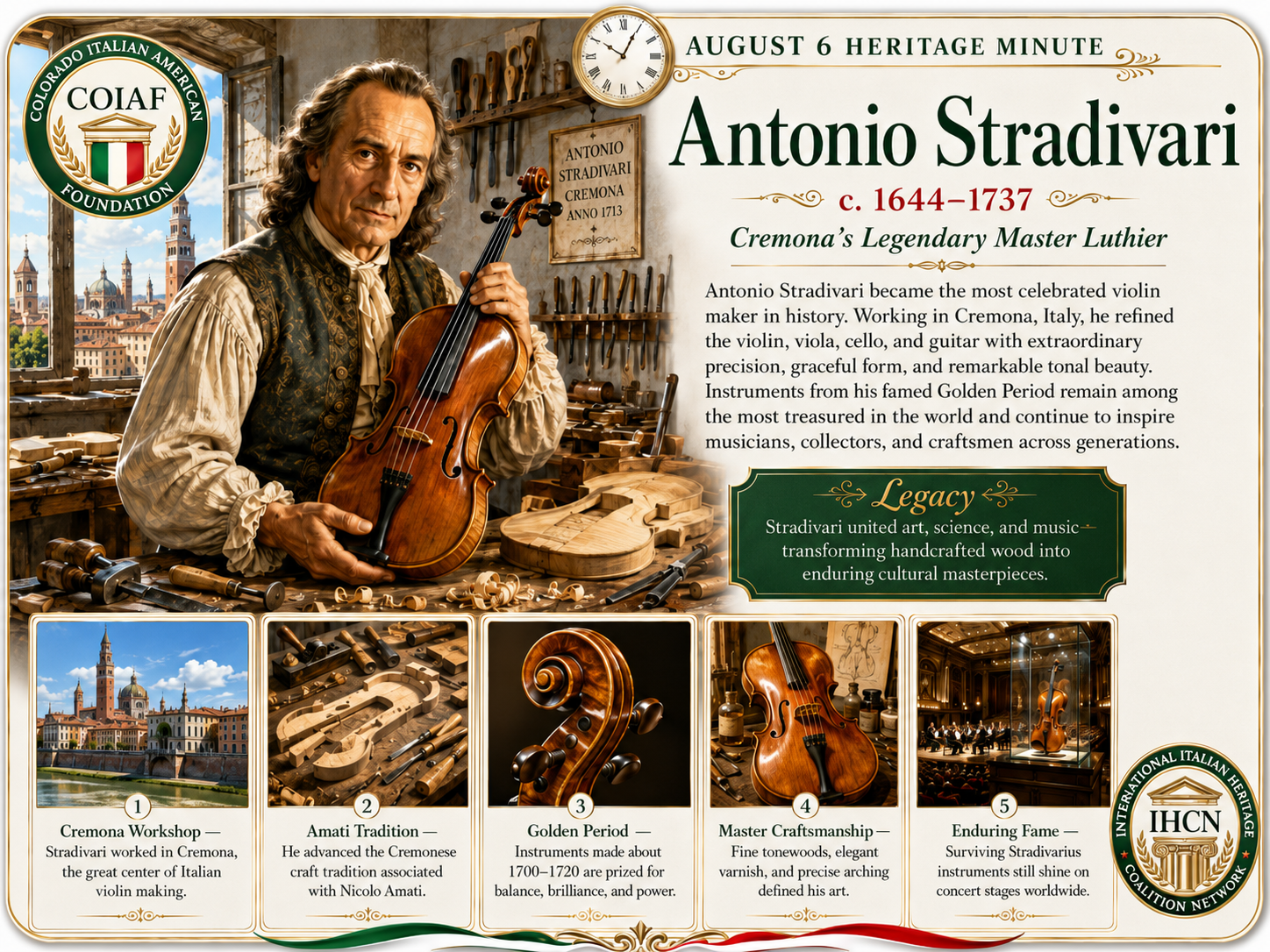
Antonio Stradivari, born in Cremona around 1644, became the most celebrated violin maker in history. Working in a city already renowned for instrument making, he carried the Cremonese tradition to an extraordinary level of precision, elegance, and musical distinction.
Stradivari developed his craft within the tradition associated with the great Amati family. Although the exact details of his early training remain uncertain, his instruments reveal a deep understanding of Cremona’s established methods and an independent determination to refine them.
His workshop produced violins, violas, cellos, and other stringed instruments. Stradivari carefully shaped their outlines, arching, thickness, fittings, and varnish, uniting visual beauty with responsiveness, carrying power, and a remarkably complex tone.
The years from about 1700 through the 1720s are commonly known as his Golden Period. Instruments from these decades display the mature proportions and confident craftsmanship for which the Stradivari name became legendary.
Stradivari continued working into advanced age and died in Cremona in 1737. His sons assisted in the family workshop, but Antonio’s finest instruments established a standard that generations of luthiers have studied, copied, and sought to understand.
Surviving Stradivarius instruments remain among the world’s most treasured cultural masterpieces. Played by distinguished musicians and preserved by museums, foundations, and collectors, they continue to demonstrate how disciplined craftsmanship can transform wood, design, and human imagination into an enduring musical voice.