August 5 • Domenico Ghirlandaio
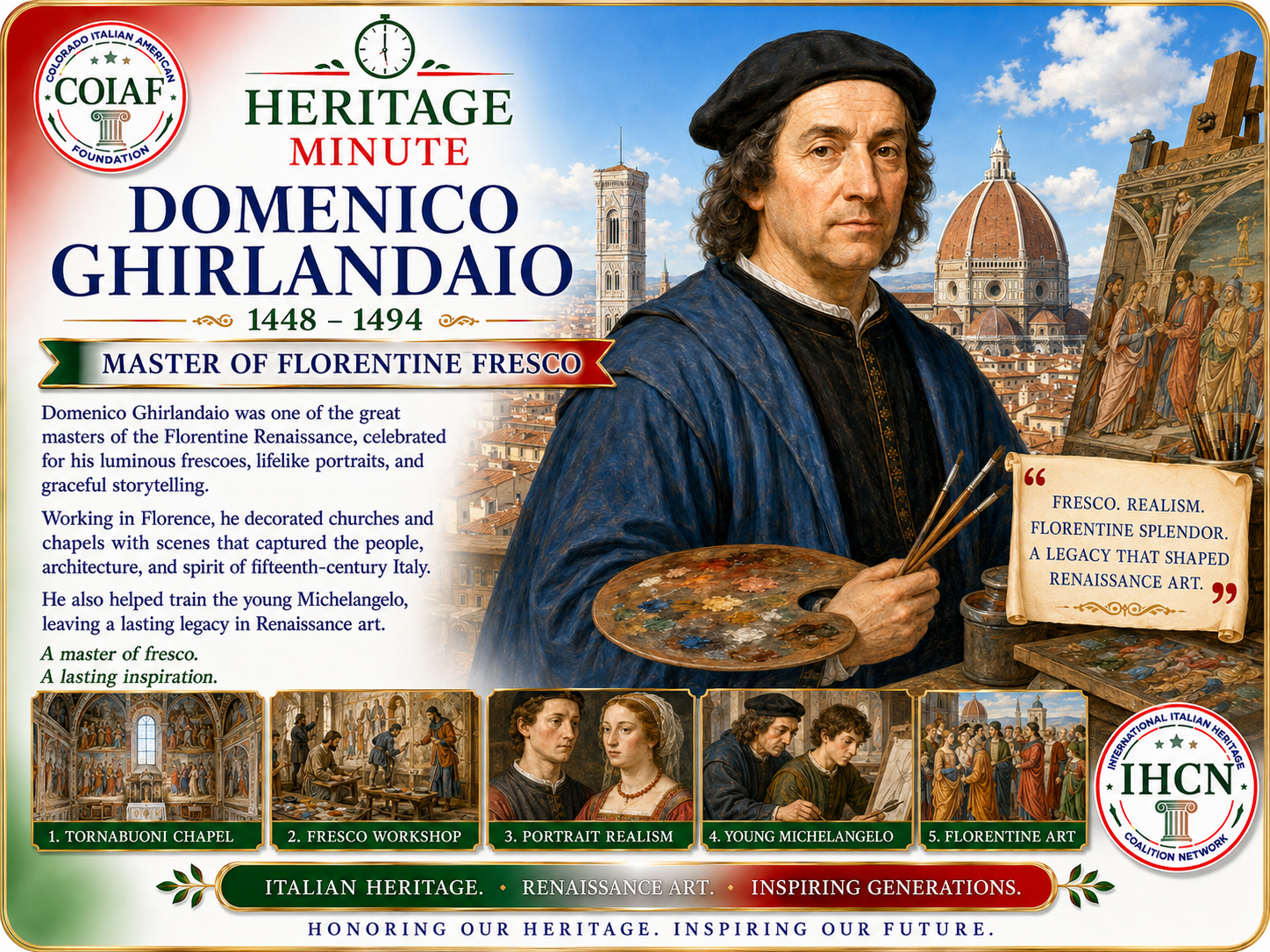
Domenico Ghirlandaio was born Domenico di Tommaso Bigordi in Florence in 1448. He became one of the most successful painters of the Florentine Renaissance, admired for monumental fresco cycles that joined sacred history with the recognizable people, architecture, clothing, and civic life of his own time.
Ghirlandaio possessed a remarkable gift for storytelling. His figures are clearly arranged, his buildings are carefully observed, and his portraits give individual personality to patrons, clergy, merchants, and families. Through these details, biblical scenes became vivid windows into fifteenth-century Florence.
Among his greatest achievements are the frescoes of the Sassetti Chapel in Santa Trinita and the grand Tornabuoni Chapel cycle in Santa Maria Novella. He also worked in the Sistine Chapel, where his Calling of the First Apostles formed part of the celebrated decorative programme commissioned before Michelangelo painted the chapel ceiling.
His portrait An Old Man and His Grandson remains one of the Renaissance’s most moving studies of human affection. Rather than idealising its elderly subject, Ghirlandaio painted him with honest physical detail while preserving the tenderness shared with the child beside him.
Ghirlandaio directed a large and productive Florentine workshop. The young Michelangelo Buonarroti entered that workshop as an apprentice, gaining early experience with drawing, fresco preparation, and the disciplined organisation required for major public commissions.
Domenico Ghirlandaio died in Florence in 1494. His art endures as a brilliant visual record of Renaissance life—uniting faith, portraiture, architecture, and human observation in images that still make Florence feel alive.