August 3 • Andrea Palladio
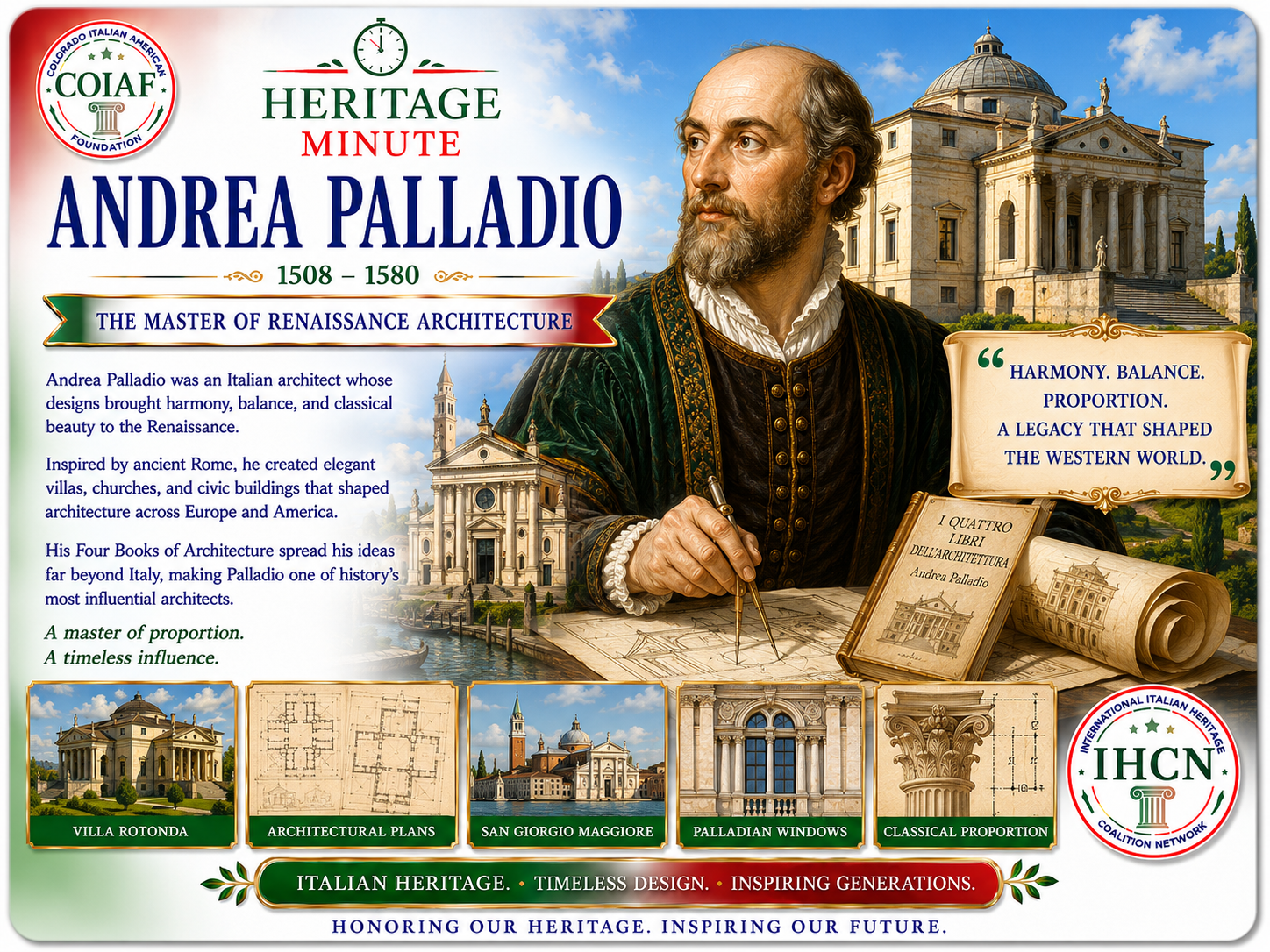
The Master of Renaissance Architecture
Andrea Palladio was born in Padua in 1508 and became one of the most influential architects in Western history. Inspired by the buildings and writings of ancient Rome, he developed an architectural style based on harmony, balance, proportion, and classical beauty.
Working primarily in the Veneto region of northern Italy, Palladio designed elegant villas, churches, civic buildings, and palaces. Among his most celebrated works are Villa Rotonda near Vicenza, the Basilica Palladiana, and the churches of San Giorgio Maggiore and Il Redentore in Venice. His buildings combined monumental classical forms with practical spaces designed for everyday life.
Palladio also recorded his architectural principles in The Four Books of Architecture, published in 1570. Filled with plans, measurements, and illustrations, the work allowed architects throughout Europe to study and reproduce his ideas. His emphasis on symmetry, columns, pediments, and carefully ordered rooms became the foundation of what is now known as Palladian architecture.
Palladio’s influence continued long after his death in 1580. His designs shaped country houses in Britain, government buildings throughout Europe, and the architecture of the United States. Thomas Jefferson admired Palladio deeply and drew upon his principles when designing Monticello and other important American buildings. Through his work and writings, Andrea Palladio created a timeless architectural language that continues to inspire the world.